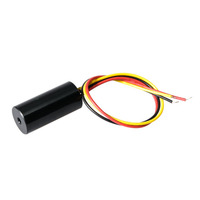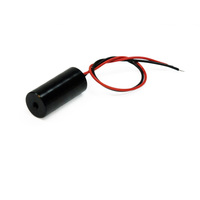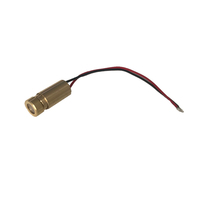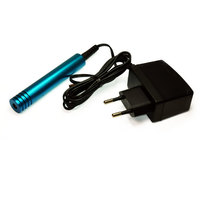
DOE281-532-5-3(16x90)-NT
DOE Laser Module 532nm, green, 5mW, DOE 1:11 Dot Line - PMMA - 8x1mm 16° with p…



Due to the special characteristics of laser radiation and the resulting biological and physical effects, special protection and precautionary measures are required when using lasers. To determine the measures to be taken in each individual case, lasers are classified according to their hazard potential. The classification of laser devices into classes 1, 1M, 2, 2M, 3R, 3B, and 4 is based on the Occupational Safety Ordinance for artificial optical radiation (OStrV), the Technical Rules for the OStrV (TROS Laser Radiation), and DIN EN 60825-1. The corresponding guidelines are specifically detailed in TROS Laser Radiation and DIN EN 60825-1.
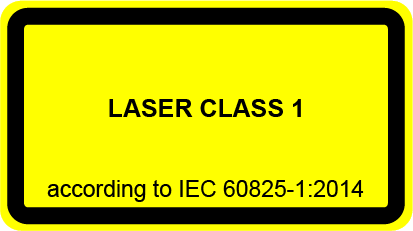 | |
|---|---|
| Accessible laser radiation is harmless. | |
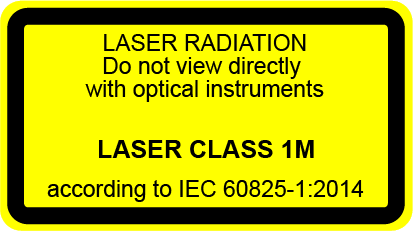 | |
|---|---|
| The accessible laser radiation is harmless providing no optical instruments such as magnifying glasses or binoculars are used. | |
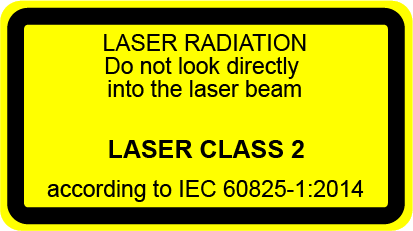 | |
|---|---|
| The accessible laser radiation is only in the visible spectral range (400 nm to 700 nm). It is also safe for the human eye in case of short term exposure to radiation (up to 0.25 s). A longer exposure is prevented by the natural eyelid closing reflex. | |
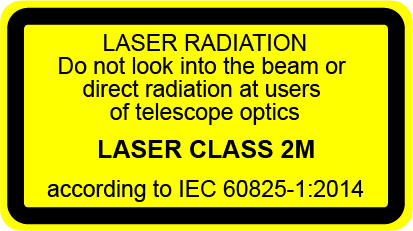 | |
|---|---|
| Like class 2 providing no optical instruments such as magnifying glasses or binoculars are used. | |
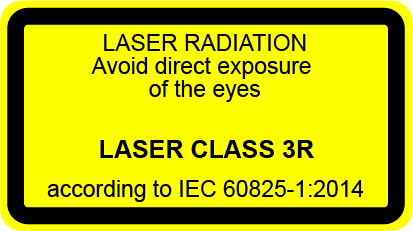 | |
|---|---|
| The accessible laser radiation is dangerous to the human eye. | |
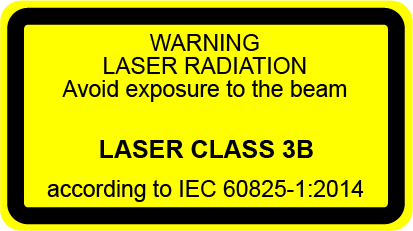 | |
|---|---|
| The accessible laser radiation is dangerous to the human eye and in special cases also to the skin. | |
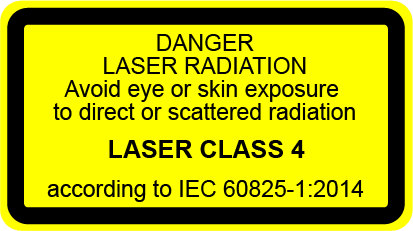 | |
|---|---|
| The accessible laser radiation is dangerous to the human eye and dangerous to the skin. Diffuse radiation can also be dangerous. The laser radiation can cause a danger of fire or explosion. | |
Scientific studies have shown that the eyelid reflex is not reliably triggered in all individuals. Therefore, it cannot generally be assumed that the eyelid reflex provides adequate eye protection.
The eyelid reflex occurs, if triggered, within approximately 0.25 seconds. Longer exposure can damage the eye. Therefore, if laser radiation of class 2 or 2M hits the eye, the eyes should be consciously closed or the gaze should be immediately averted.
It should also be noted that the eyelid reflex can only be triggered by visible laser radiation. For example, infrared laser radiation does not lead to an eyelid reflex because it is not perceived by the eye. For this reason, special caution is required when handling invisible laser radiation.
The precautionary measures of the Occupational Safety Ordinance for artificial optical radiation (OStrV) and the Technical Rules for the OStrV (TROS Laser Radiation) must be observed. These include, among other things:
The operator of the laser device is responsible for ensuring compliance with the protective measures. In particular, he is responsible for ensuring that the laser devices are assigned to a laser class and are properly labeled. The operation of laser devices in classes 3R, 3B, and 4 must be reported to the relevant authority and professional association. When operating such lasers, a laser area must be determined, demarcated, and marked.
Furthermore, the operator must appoint qualified persons as laser safety officers when operating laser devices of classes 3R, 3B, and 4.
Employees who use laser devices of classes 1M, 2, 2M, 3R, 3B, or 4 or who may be present in the laser area of devices in classes 3R, 3B, and 4 must be instructed on the effects of laser radiation and the necessary protective measures.
For the operation of laser devices of classes 3R, 3B, and 4, the operator must provide suitable personal protective equipment, particularly laser safety goggles, protective clothing, or protective gloves.
The operator is also responsible for complying with the specific safety requirements during the operation of the respective laser types.

Depending on the application, various safety aspects need to be considered. Learn more with our Safety Guide
To the safety guide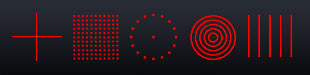
Laser modules with geometric patterns for a number of practical applications.
Learn more!